
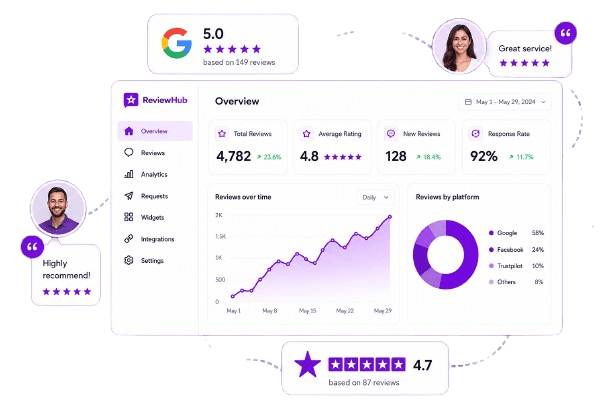
Reputation management sounds like an enterprise problem, but most of it is small, consistent habits — the kind any business can run without a dedicated team.
Claim and complete every listing
- Google Business Profile — verify ownership, fill in hours, categories, and photos
- Trustpilot, G2, or category-relevant platforms your customers actually use
- Keep name, address, and phone number identical across every listing — inconsistency hurts local search ranking
Make leaving a review effortless
The single biggest lever for review volume isn't asking harder — it's removing friction. A direct review link (not a search-and-find), sent at the right moment (right after a good interaction, not three weeks later), outperforms almost any other tactic.
Reply to every review — especially the negative ones
An unanswered negative review reads as unresolved. A thoughtful, non-defensive reply — acknowledging the issue and stating what was done about it — is read by every future customer who sees that review, not just the one who wrote it.
Never filter, gate, or selectively request reviews
It's tempting to only ask customers you're confident are happy. This is a policy violation risk (see our Google review policy guide) and, more practically, it produces a rating that doesn't reflect reality — which erodes trust the moment a less flattering review inevitably appears.
Track trends, not just the average
A single low rating means less than a downward trend across several. Reviewing verified feedback monthly — not just reacting to the latest one-star review — is what turns review data into an actual improvement loop instead of noise.